Saccharification Time, Temperature, and pH Problems in Rice Syrup Lines
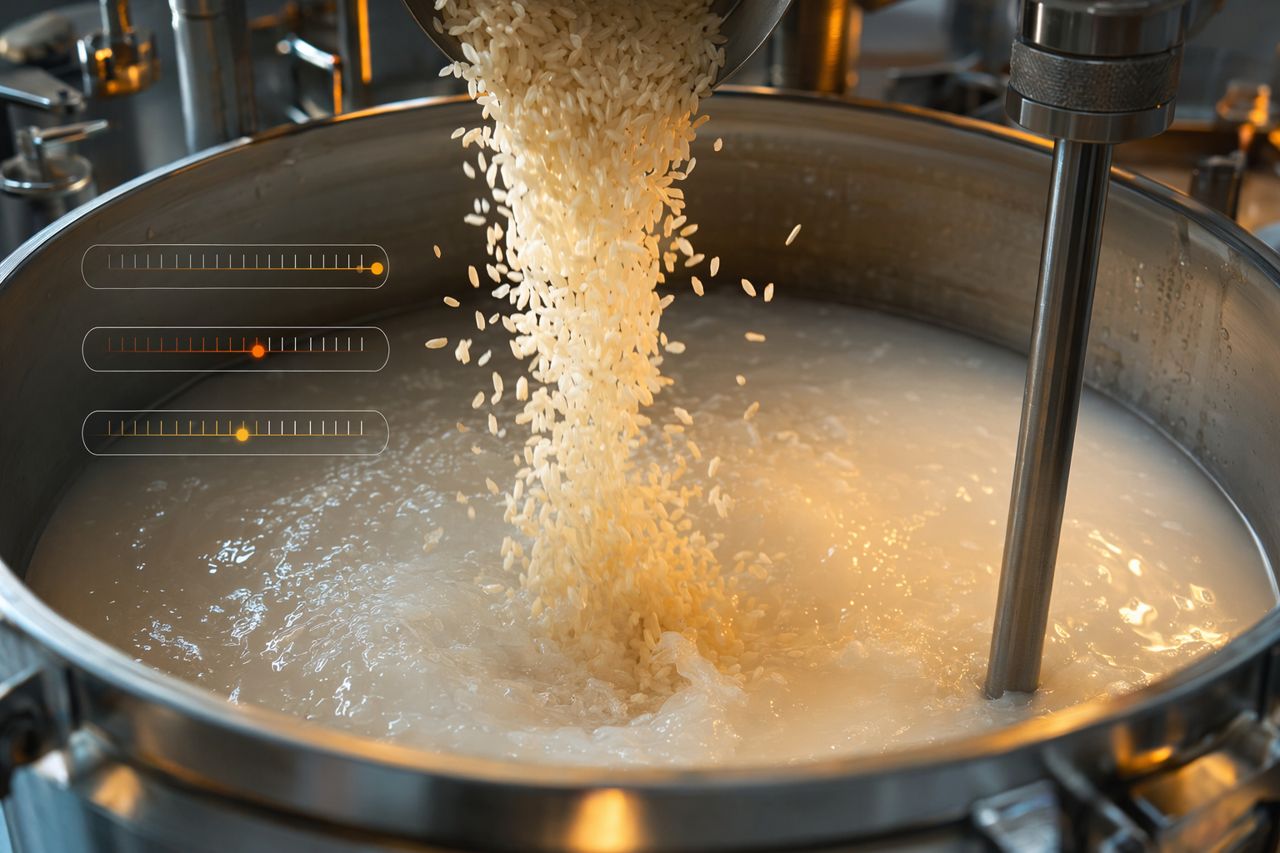
Rice syrup production rewards discipline. When saccharification is stable, the line moves: viscosity drops predictably, conversion follows the target curve, filtration behaves, and downstream concentration is easier to control.
When saccharification drifts, the whole plant feels it. Holding tanks fill. Filters blind early. Syrup color and sweetness shift between batches. Evaporators work harder. Operators compensate with extra time, extra checks, and extra cleaning.
Enzymesvalue supports rice syrup manufacturers as an enzyme supplier for rice syrup production, with practical focus on yield stability, batch consistency, and plant-floor troubleshooting.
Faceless explainer video
Why saccharification problems show up as plant problems
Saccharification is not just a conversion step on a batch sheet. It sets the behavior of the syrup through the rest of the process.
If conversion is incomplete or uneven, the line may see:
- Higher residual dextrin load and stubborn viscosity
- Slower filtration or more frequent filter changeovers
- Variable DE and Brix progression from batch to batch
- Unstable sweetness profile and syrup body
- Longer tank residence time and reduced daily throughput
- More operator intervention to rescue borderline batches
In rice syrup factories, these issues often trace back to three linked variables: time, temperature, and pH.
Problem 1: Saccharification time is too long, too short, or inconsistent
A longer hold is not always a better hold. If enzyme performance is limited by temperature, pH, substrate condition, or carryover from liquefaction, simply adding time can reduce scheduling flexibility without fixing the root cause.
Common signs on the line
- Batch A reaches target conversion on schedule, while Batch B needs extended holding
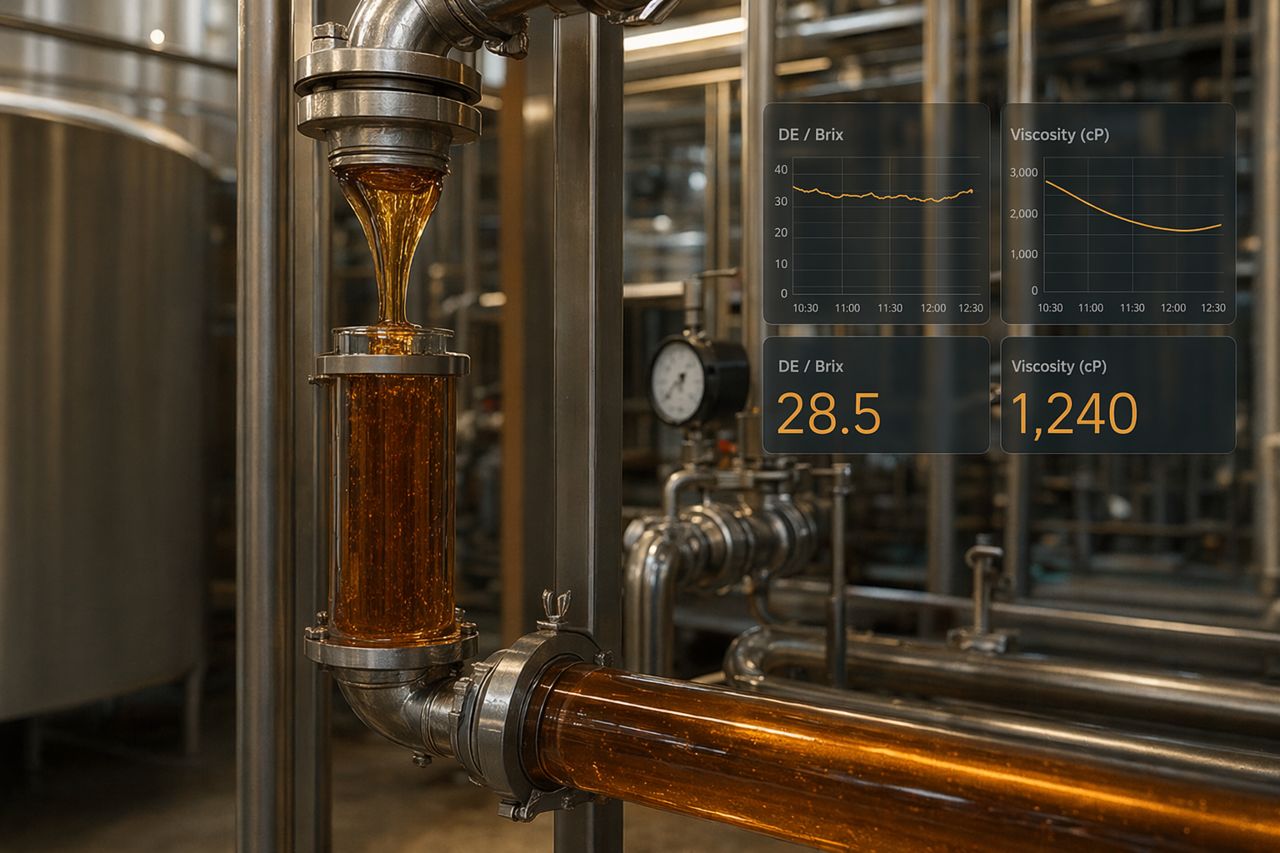
- Viscosity remains high even after the expected saccharification window
- Filtration improves late, but only after tying up tank capacity
- Operators delay transfer decisions because the batch curve is not predictable
Practical causes to check
- Variation in rice starch slurry preparation
- Uneven liquefaction feeding into saccharification
- Inconsistent temperature control during enzyme contact
- pH drift after adjustment or during holding
- Enzyme selection not matched to the plant’s actual process window
Commercial impact
Inconsistent saccharification time reduces effective capacity. Even when the final batch can be saved, the line pays through delayed transfers, longer tank occupancy, and less predictable production planning.
Problem 2: Temperature is technically close, but operationally unstable
Saccharification enzymes do not operate in isolation. They operate inside a real plant, with heat exchangers, tank jackets, transfer lines, dead zones, and operator timing.
A temperature profile that looks acceptable at one reading point may not represent the full batch.
What temperature drift can create
- Slow conversion during cool zones or slow heat recovery
- Enzyme stress during overheated contact points
- Batch-to-batch variation after maintenance or seasonal water changes
- Inconsistent viscosity drop before filtration
Where to look first
- Temperature difference between recirculation loop and tank body
- Heat loss during transfer from liquefaction to saccharification
- Mixing efficiency during enzyme addition
- Sensor location versus actual process behavior
- Waiting time between pH correction, temperature stabilization, and enzyme dosing
The goal is not to chase a perfect number on a screen. The goal is to keep the enzyme in a dependable working environment long enough to deliver repeatable conversion.
Problem 3: pH is adjusted, but it does not stay controlled
pH is often treated as a quick correction step. In practice, pH can shift during holding, especially when upstream rice slurry quality, liquefaction conditions, water chemistry, or dosing sequence changes.
pH-related symptoms
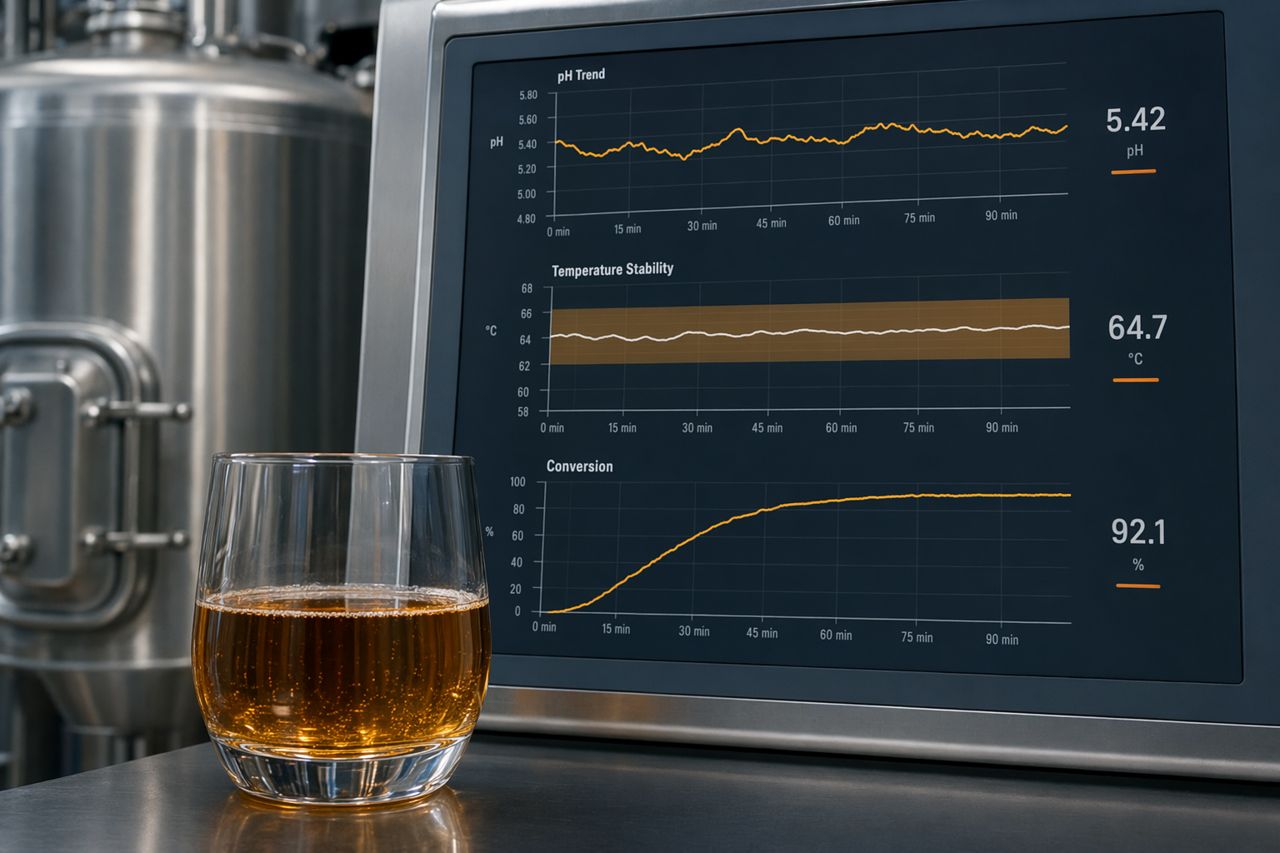
- Conversion curve starts normally, then slows
- Same enzyme dose gives different batch outcomes
- Syrup body changes even when Brix appears on target
- Filtration behavior varies without an obvious solids change
Plant-floor checks
- Confirm pH after mixing, not only immediately after dosing correction
- Review pH at transfer, mid-hold, and before saccharification endpoint decisions
- Compare pH behavior across rice lots and slurry preparation changes
- Check whether acid or alkali addition creates localized stress before full dispersion
A stable pH profile helps the enzyme perform consistently. It also gives operators clearer decision points and fewer borderline batches.
The overlooked link: liquefaction quality affects saccharification
Saccharification problems are not always caused inside the saccharification tank.
If liquefaction produces inconsistent dextrin distribution, the saccharification enzyme receives a moving target. The result can be uneven viscosity reduction, delayed conversion, and filtration problems that appear downstream.
Before changing the saccharification enzyme or extending hold time, review:
- Rice slurry solids consistency
- Liquefaction temperature stability
- Holding and transfer delays before saccharification
- Mixing quality during enzyme addition
- Viscosity trend entering saccharification
Good saccharification starts with a feed that the enzyme can work on predictably.
How Enzymesvalue helps rice syrup plants stabilize saccharification
Enzymesvalue supplies enzyme solutions and technical support for rice syrup production with a practical goal: make the process easier to run and more consistent to scale.
Our support can help your team evaluate:
- Enzyme fit for your rice starch process and syrup target
- Saccharification response under your actual temperature and pH window
- Ways to improve viscosity reduction before filtration
- Batch consistency across rice lots and production shifts
- Conversion behavior linked to downstream Brix, color, and syrup body
- Practical dosing and addition points that fit existing plant equipment
We speak in plant terms: throughput, repeatability, downtime, filtration behavior, and finished syrup quality.
Troubleshooting checklist for your next production review
Use this checklist when saccharification performance starts drifting.
Time
- Are batches reaching target conversion within the planned production schedule?
- Is tank occupancy increasing even when final syrup still passes release checks?
- Are operators extending hold time to compensate for slow viscosity reduction?
Temperature
- Does the tank temperature match the recirculation or transfer-line temperature?
- Are there cold zones or heat spikes during enzyme addition?
- Has heat transfer performance changed after cleaning, maintenance, or seasonal operation?
pH
- Is pH verified after full mixing?
- Does pH remain stable during the hold?
- Do certain rice lots require more correction than others?
Downstream behavior
- Are filters loading faster than normal?
- Is syrup body heavier than expected at the same Brix?
- Are evaporator runs less predictable after certain batches?
If several answers point in the same direction, the issue is usually not a single bad batch. It is a process window problem.
What to share when requesting enzyme support
For faster technical review, prepare the following information for Enzymesvalue:
- Rice raw material type and slurry preparation method
- Current liquefaction and saccharification sequence
- Target syrup profile, including DE and Brix expectations
- Main issue: slow conversion, high viscosity, filtration load, or batch variation
- Typical pH and temperature trend during saccharification
- Downstream constraints such as filtration capacity or evaporator scheduling
- Current cleaning or downtime pressure linked to syrup processing
This allows Enzymesvalue to recommend an enzyme approach that fits your line, not a generic laboratory assumption.
Request a quote
If saccharification time, temperature, or pH control is limiting your rice syrup output, Enzymesvalue can help you review the process and select a practical enzyme solution.
Request a quote through the on-site form and tell us what your line is trying to improve: faster conversion, lower viscosity, better filtration, more stable batches, or higher daily throughput.