Rice Sweetener Factory Enzyme Buying Guide
Rice syrup production rewards consistency. The right enzyme program helps a plant hold conversion targets, manage slurry viscosity, protect filtration rate, and reduce the avoidable downtime that comes from batch drift.
Enzymesvalue supplies enzyme solutions for rice sweetener factories that need commercially practical support, not generic catalog language. This guide explains how to buy enzymes by process stage, package size, storage plan, lead time, and reorder cadence while keeping manufacturer and assay details confidential.
What a rice syrup factory should expect from an enzyme supplier
An enzyme supplier for rice syrup production should help your team connect enzyme selection to plant-floor outcomes:
- More stable liquefaction viscosity
- Cleaner starch conversion profiles
- Better filtration behavior after conversion
- More predictable Brix build
- Reduced batch-to-batch correction work
- Practical recommendations for packaging, storage, and reordering
- Technical support that understands syrup plant constraints
Enzymesvalue focuses on fit-for-process recommendations: raw material condition, slurry solids, cooking profile, pH window, temperature exposure, hold time, filtration load, and target syrup profile.
Buy by process stage, not by product name alone
Rice syrup production usually needs more than one enzyme decision. The buying conversation should start with the process step that creates the bottleneck.
1. Slurry preparation and viscosity management
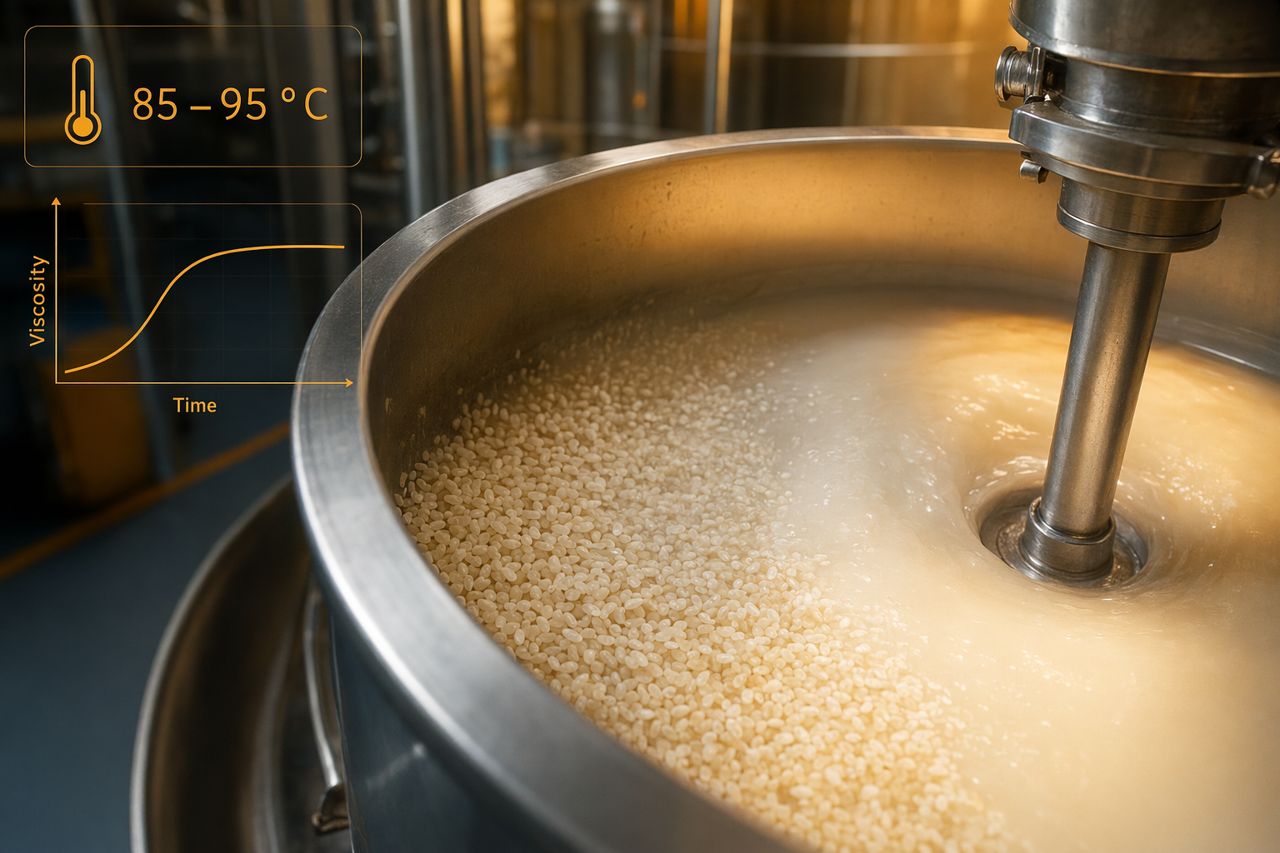
Rice starch slurry can become difficult to move, heat, and mix when viscosity rises too quickly. A liquefaction enzyme program is selected to reduce viscosity in a controlled way so the process remains pumpable and heat transfer stays reliable.
What to discuss with Enzymesvalue:
- Rice flour or broken rice quality
- Slurry solids and mixing behavior
- Jet cooking or batch cooking profile
- Peak viscosity concerns
- Pump load, hold tank behavior, and transfer time
- Whether viscosity swings are seasonal or supplier-related
Commercial value: smoother handling, fewer emergency dilution decisions, and more stable downstream conversion.
2. Liquefaction support for stable conversion feed
Liquefaction sets the stage for saccharification. If the liquefied mash varies too much, downstream conversion becomes harder to control.
A suitable liquefaction enzyme should support:
- Predictable viscosity reduction
- Consistent dextrin formation
- Better tank-to-tank repeatability
- Lower risk of incomplete starch breakdown entering saccharification
For buyers, the main question is not simply “which enzyme is strongest?” The better question is “which enzyme gives our factory the most stable feed into the next step?”
3. Saccharification for syrup profile control
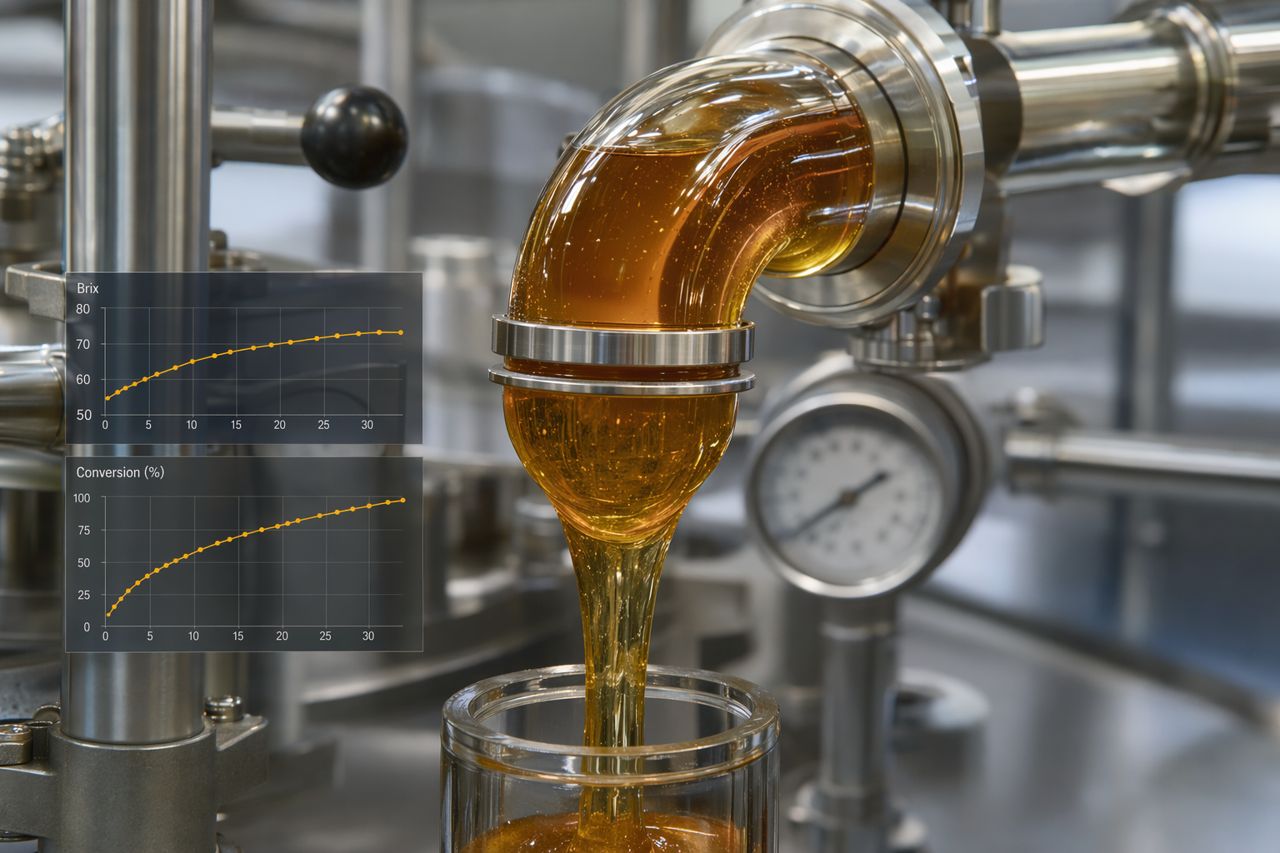
Saccharification enzymes are chosen according to the desired rice sweetener profile. A plant making high-glucose syrup, maltose-rich syrup, or a custom blend may require different enzyme combinations and process timing.
Important buying inputs include:
- Target sweetness profile
- Dextrose equivalent expectation
- Brix target
- Saccharification time window
- pH and temperature control reliability
- Whether conversion is limited by time, tank capacity, or filtration load
Commercial value: fewer off-profile batches, better planning around tank occupancy, and more dependable syrup specifications.
4. Debranching support when conversion efficiency matters
For some rice syrup factories, debranching enzyme support can improve conversion behavior by opening starch structures that otherwise slow the process. This can be relevant when the plant is chasing higher conversion efficiency or a more specific sugar distribution.
Discuss this stage when you see:
- Conversion plateauing earlier than expected
- Long saccharification holds with limited improvement
- Syrup profile variation despite stable cooking
- Yield pressure from raw material cost
Enzymesvalue can help evaluate whether a debranching component is justified commercially, rather than adding complexity without a clear return.
5. Filtration and downstream clarification behavior
Enzyme selection affects more than conversion. It can influence solids behavior, filter loading, syrup clarity, and how hard the downstream section has to work.
If filtration is a recurring bottleneck, include these details in your quote request:
- Filter type and current bottleneck
- Slurry or syrup clarity concerns
- Hold time before filtration
- Insoluble solids behavior
- Frequency of filter changeout or cleaning
- Whether downtime occurs after specific rice lots
Commercial value: steadier filtration, reduced unplanned stops, and better throughput across the full line.
Packaging: choose what matches your plant reality
Enzymesvalue can support purchasing plans by kilo based on consumption rate, batch size, storage capacity, and reorder rhythm. The goal is to avoid two common problems: tying up cash in excess inventory or risking shutdown because enzyme supply was not planned early enough.
Common packaging planning questions
Before requesting a quote, prepare answers to:
- How many batches are produced per week?
- Which enzyme stages are currently used?
- Is the plant trialing, scaling, or running steady production?
- Are multiple syrup profiles produced on the same line?
- How much cold or controlled storage is available?
- Is the buyer planning one-time purchasing or scheduled replenishment?
Enzymesvalue can quote practical kilo quantities for trials, production start-up, and ongoing supply. For larger factories, scheduled release plans can help keep inventory aligned with production demand.
Storage planning: protect performance before the enzyme reaches the tank
Good enzyme purchasing includes storage discipline. Poor storage can create performance variation that looks like a process problem.
Plan for:
- Dry, clean storage away from heat exposure
- Clearly labeled receiving and issue dates
- First-in, first-out inventory rotation
- Separation from incompatible chemicals
- Protected handling after opening
- Defined responsibility for stock checks
If your plant has seasonal temperature swings or limited controlled storage, tell Enzymesvalue during the quote process. Packaging and reorder cadence can be adjusted around the site’s real conditions.
Lead-time planning for rice syrup production
Enzyme buying should be tied to your production schedule, not handled only when inventory is low. Rice syrup plants often face raw material changes, seasonal demand peaks, and maintenance windows. A stronger purchasing plan accounts for all three.
Suggested lead-time inputs
Include the following in your request:
- Monthly syrup output estimate
- Current and target production schedule
- Expected start date for trial or production use
- Destination and receiving constraints
- Preferred shipment frequency
- Whether you need one enzyme or a full process package
Enzymesvalue can then recommend a supply plan that supports production continuity without forcing unnecessary overstock.
Reorder cadence: build a rhythm before stock becomes urgent
A reliable reorder cadence helps prevent rushed decisions and line risk. For steady rice syrup production, buyers often benefit from a simple reorder trigger based on consumption rate and remaining inventory.
Practical reorder triggers
Consider setting internal triggers based on:
- Average weekly use by kilo
- Number of production days covered by current stock
- Minimum stock needed before the next shipment arrives
- Seasonal production peaks
- Planned maintenance or shutdown periods
- Trial activity that may increase enzyme drawdown
Enzymesvalue can help estimate a starting reorder rhythm after reviewing your process stage, approximate usage pattern, and production schedule.
Online quote-based purchasing by kilo
Enzymesvalue supports quote-based purchasing by kilo through the on-site request form. This keeps the buying process practical for industrial users while allowing the technical team to confirm the right enzyme fit before supply is arranged.
This is especially useful when:
- You are replacing an existing enzyme program
- You need trial quantities before plant adoption
- You want to align purchasing with batch frequency
- You require a multi-enzyme package for liquefaction and saccharification
- You need technical review before committing to repeat orders
Use the form to describe the process stage, target syrup profile, batch size, and current bottleneck. Enzymesvalue will respond with a relevant quote path.
What to include in your quote request
For the fastest response, include:
- Factory location and rice sweetener type
- Raw material form: rice flour, broken rice, or starch feed
- Process stage needing support
- Current bottleneck: viscosity, conversion, filtration, yield, or consistency
- Target Brix and syrup profile if available
- Batch or daily production scale
- Required kilo quantity or expected monthly consumption
- Preferred delivery timing
- Storage limitations if any
You do not need to disclose confidential production formulas. Enzymesvalue can start with operating ranges and commercial objectives, then refine the recommendation through technical discussion.
Why rice syrup factories choose Enzymesvalue
Enzymesvalue is positioned for buyers who need more than a product list. We help connect enzyme supply to production stability, filtration behavior, downtime reduction, and repeatable syrup quality.
Enzymesvalue supports:
- Stage-specific enzyme selection
- Practical kilo-based quoting
- Trial and scale-up planning
- Reorder cadence support
- Storage and handling guidance
- Technical discussion with plant-floor context
- Confidential handling of process information
If your rice syrup line is dealing with viscosity swings, slow conversion, filtration load, or uncertain enzyme purchasing, Enzymesvalue can help you build a more reliable supply plan.
Request a quote
Tell us what your rice syrup factory is trying to improve: viscosity control, conversion stability, syrup profile, filtration rate, yield consistency, or reorder reliability.
Request a quote and Enzymesvalue will review your process stage, kilo requirement, packaging needs, and lead-time expectations.