Rice Syrup DE Targets Explained for Plant Managers
In a rice syrup factory, DE is not just a lab number. It is a production target that affects viscosity, filtration behavior, sweetness, color development, solids handling, tank turnover, and customer consistency.
For plant managers, the question is practical: which DE target gives the syrup profile the customer wants while keeping the line stable and predictable?
Enzymesvalue supports rice syrup producers with enzyme solutions built around real process outcomes: steady liquefaction, controlled saccharification, cleaner filtration, repeatable batch profiles, and faster troubleshooting when the process drifts.
As an enzyme supplier for rice syrup production, Enzymesvalue helps factories connect DE targets to the enzyme system, process window, and commercial syrup specification.
What DE means in rice syrup production
DE, or dextrose equivalent, indicates the extent to which rice starch has been converted into smaller sugars. A higher DE generally means more conversion, more reducing sugars, lower viscosity, and a sweeter syrup profile. A lower DE usually means more body, more longer-chain carbohydrates, and higher viscosity.
That sounds simple, but on the plant floor DE sits inside a wider production picture:
- Rice quality and starch accessibility
- Slurry preparation and gelatinization behavior
- Liquefaction consistency
- Saccharification time and enzyme fit
- Filtration load and solids carryover
- Evaporation performance
- Final Brix, color, flavor, and storage stability
The right DE target is the one your operation can hit repeatedly without creating bottlenecks downstream.
Why DE target choice changes factory performance
Viscosity control
Lower conversion leaves more long-chain material in the syrup. That can support body, but it can also increase viscosity in tanks, pipes, filters, and evaporators. If viscosity moves outside the expected range, pumps work harder, transfer times stretch, and filtration becomes less predictable.
A controlled enzyme program helps the plant reach the intended conversion profile without over-thinning or under-converting the batch.
Filtration behavior
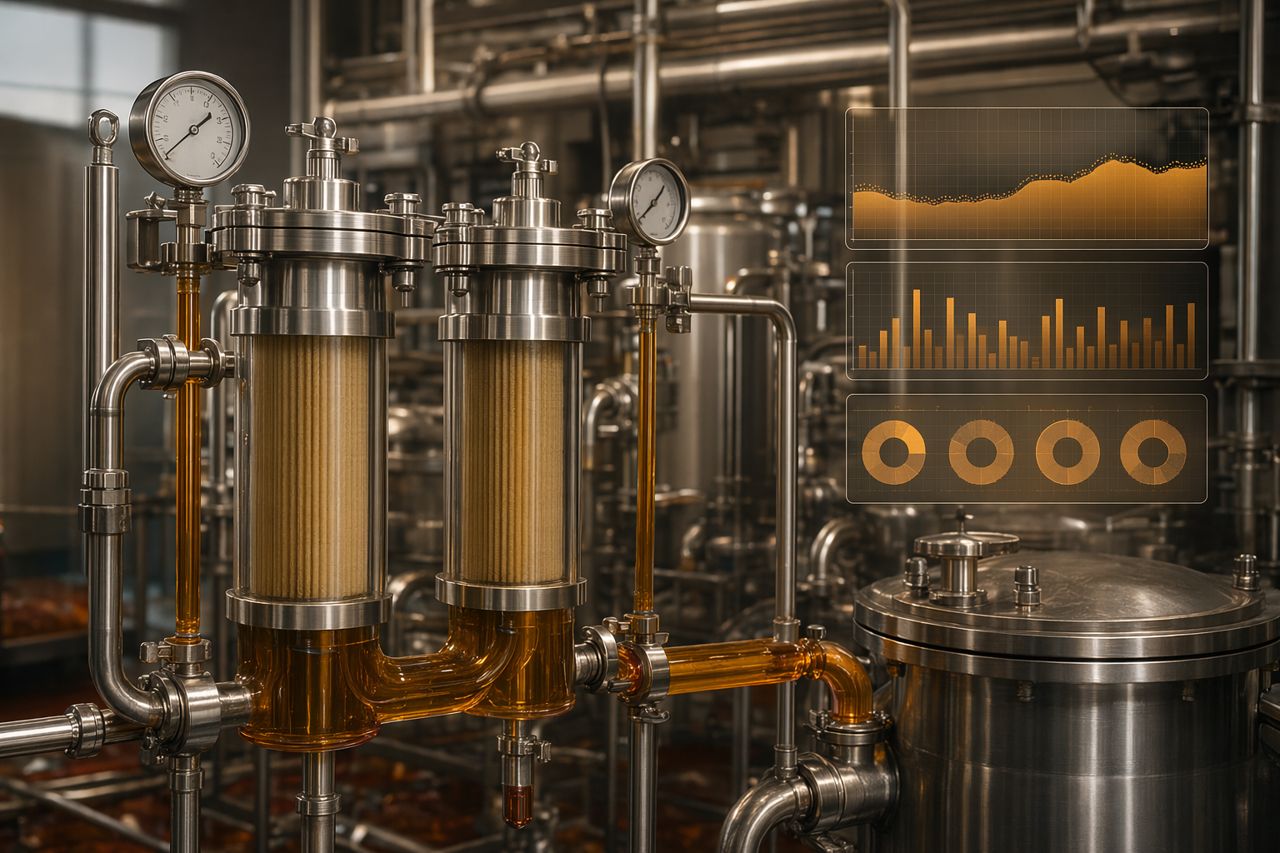
Poorly controlled hydrolysis can send difficult solids, haze-forming material, or high-viscosity liquid into filtration. The result is slower flow, earlier filter blinding, more cleaning events, and less dependable throughput.
DE is one signal, but filtration performance depends on how the starch was opened, liquefied, and saccharified. Enzymesvalue looks at the full conversion path, not just the final number.
Sweetness and customer specification
Higher-DE syrups usually deliver more sweetness and a lighter handling profile. Lower-DE syrups may be selected for body, mild sweetness, binding behavior, or formulation function. Food manufacturers care about consistency from lot to lot, so syrup plants need a repeatable conversion profile, not a target that is only achieved on good days.
Yield stability
When DE control is unstable, operators may compensate with longer holds, rework, filtration changes, or conservative production scheduling. That ties up tanks and reduces confidence in daily output. Stable enzyme performance supports more predictable yield from rice input to finished syrup.
Common DE target zones in rice syrup operations
Every customer specification is different, but rice syrup DE targets usually fall into practical production zones.
| DE direction | Typical syrup intent | Plant-floor watchpoints |
|---|---|---|
| Lower DE | More body, less sweetness, functional solids | Higher viscosity, slower filtration, careful liquefaction control |
| Mid-range DE | Balanced sweetness, body, and handling | Tight batch control, stable saccharification, repeatable customer profile |
| Higher DE | Sweeter syrup, easier pumping, faster handling | Avoid over-conversion, monitor color and flavor development |
The plant decision is rarely “highest DE possible.” It is usually “the DE that matches customer use while keeping the factory efficient.”
Enzyme selection: what changes with the target
Rice syrup production typically depends on a staged enzyme approach. The exact system depends on rice substrate, equipment, process window, and finished syrup specification.
Liquefaction enzymes
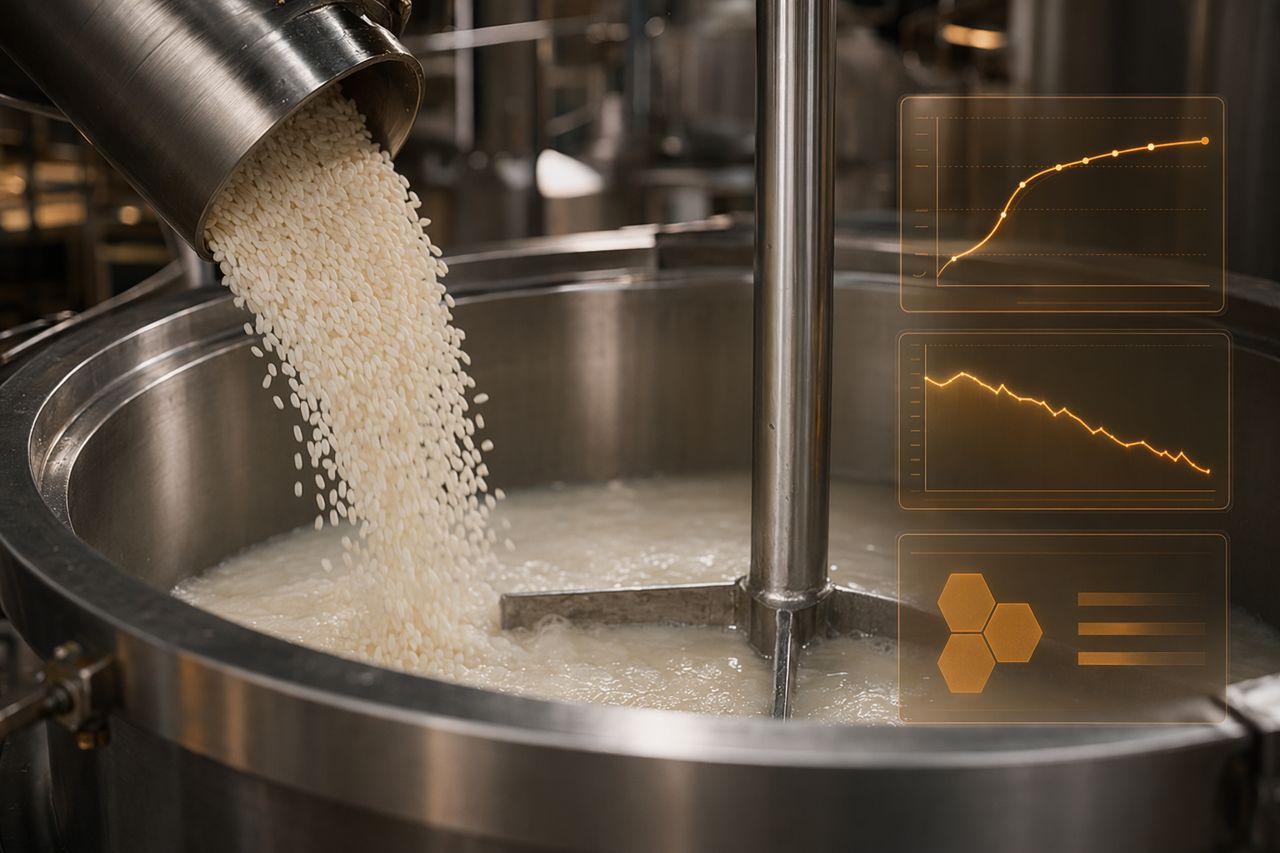
Liquefaction is where starch structure is opened and viscosity is brought under control. If liquefaction is uneven, the saccharification stage has to fight inconsistency. That can show up as variable DE, poor filtration, or extended batch time.
For plant managers, good liquefaction means:
- Faster viscosity drop during the intended process window
- Fewer transfer and mixing problems
- Better preparation for downstream conversion
- Reduced risk of thick or uneven batches
Saccharification enzymes
Saccharification shapes the final sugar profile and DE movement. The enzyme choice influences how quickly the batch approaches target, how stable the endpoint is, and how much operational flexibility the plant has.
Good saccharification control helps with:
- Consistent DE endpoint
- Predictable sweetness and solids profile
- Repeatable batch timing
- Reduced need for corrective holds or blending
Debranching support
When the target calls for deeper or cleaner conversion, debranching support may improve access to starch branches and help the plant reach the desired syrup profile more efficiently. The value is not just a higher number; it is a cleaner, more manageable conversion path.
Signs your DE target is not well controlled
A rice syrup line usually shows warning signs before the customer complaint arrives.
Look for:
- Same recipe, different viscosity from batch to batch
- Filter cycles shortening without a clear mechanical cause
- Operators extending saccharification to “make the number”
- Evaporator behavior changing between lots
- Syrup color drifting during longer process holds
- Finished syrup requiring more blending to meet specification
- Customer feedback on sweetness, body, or handling inconsistency
If these issues repeat, the problem may not be a single enzyme dose or one operator decision. It may be the fit between rice quality, process conditions, enzyme system, and DE target.
How Enzymesvalue helps plants set and hold DE targets
Enzymesvalue works with rice syrup factories from the production outcome backward. The goal is not to sell a generic enzyme. The goal is to help the plant run a stable process that meets the finished syrup specification with less downtime and less batch uncertainty.
Our technical support focuses on:
- Matching enzyme systems to target syrup profile
- Improving liquefaction consistency before saccharification
- Supporting viscosity control across batches
- Reducing filtration stress caused by uneven conversion
- Helping production teams investigate DE drift
- Building practical recommendations that fit existing equipment
Questions to align before changing the enzyme program
Before adjusting enzyme selection, plant teams should align on the commercial and operational target.
Ask:
- What finished syrup profile does the customer actually need?
- Is the current issue DE, viscosity, filtration, color, sweetness, or all of them?
- Where does batch variation first appear: slurry, liquefaction, saccharification, filtration, or evaporation?
- Is the target realistic for the current rice input and equipment?
- Does the plant need faster conversion, tighter endpoint control, or better downstream handling?
Clear answers prevent unnecessary trial cycles and help the supplier recommend the right enzyme approach.
Practical takeaway for plant managers
A DE target is a factory operating decision, not only a product specification. It determines how the syrup flows, filters, concentrates, stores, and performs for the customer.
When DE is controlled well, the line is easier to run. When it drifts, the entire process feels less predictable.
Enzymesvalue supplies enzyme solutions for rice syrup production with a focus on stable conversion, viscosity control, filtration behavior, and dependable technical support.
Request a quote
Planning a new rice syrup specification or troubleshooting DE variation on an existing line? Use the request a quote form on this page and tell Enzymesvalue your target syrup profile, current process challenge, and production priorities. Our team will respond with a practical enzyme recommendation for your factory.